
Off-grid does not mean improvising
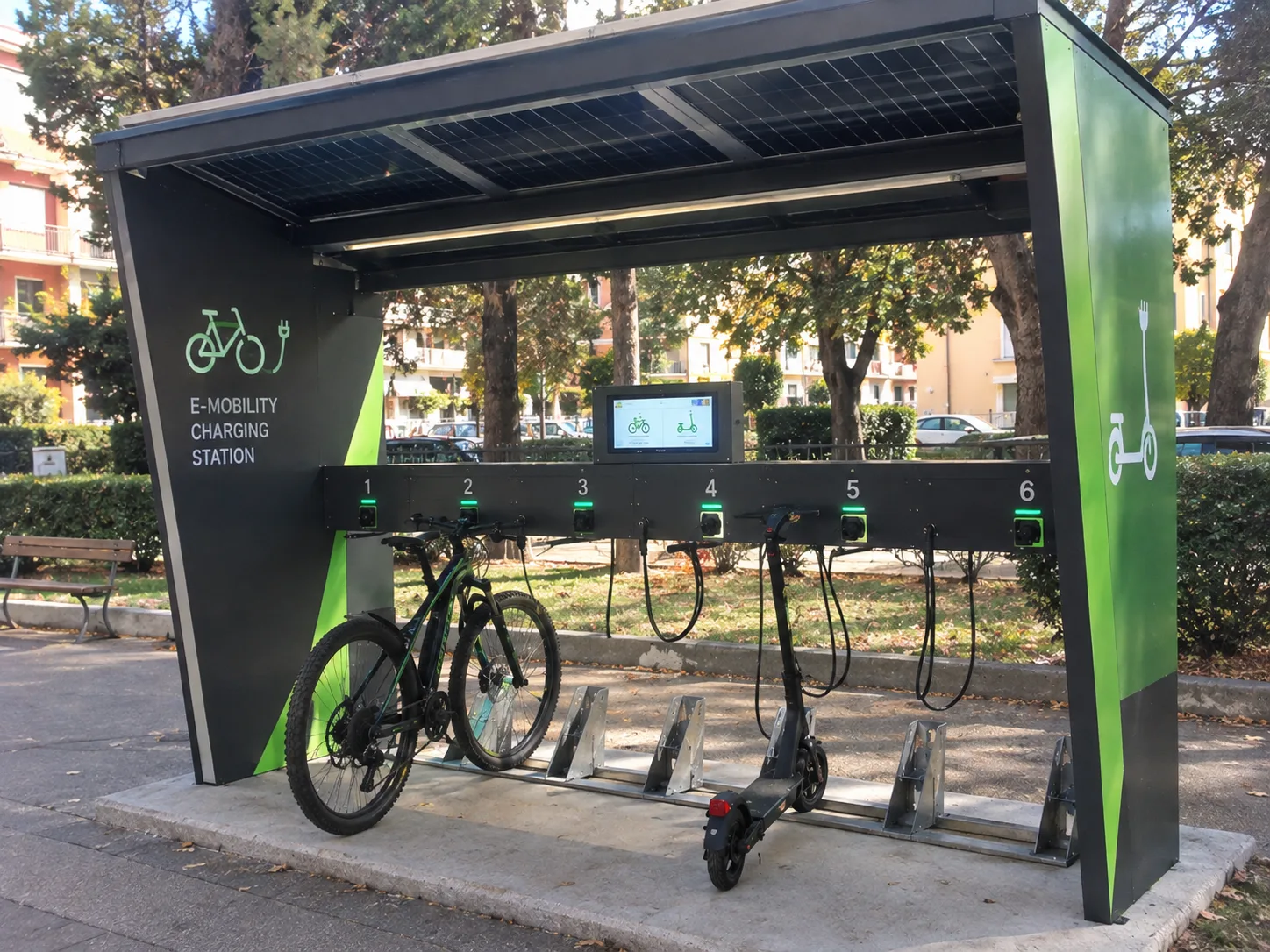
A solar charging station for e-bikes and scooters is attractive when bringing grid power is expensive, slow or damages the layout of the area. Off-grid, however, does not mean installing without a plan: it means choosing a site with sun, user flows and a clear operating model. Project Vending's Smart Pergola is built for these contexts: 6 positions, monocrystalline photovoltaics, outdoor structure and optional remote monitoring.
This guide does not repeat the full datasheet. It helps municipalities, hotels, campsites, campuses and tourism operators understand where the pergola creates value, which questions to ask before a site visit and how to pair it with 24/36 V vehicles or guest fleets. For structure, panel and MPPT specs, see the Smart Pergola product article.
When the grid is not the best choice
In many outdoor spaces the real cost of charging is not the column, but excavation, cabling, paperwork and connection time. A photovoltaic pergola reduces that dependency and can go live faster, provided irradiance and load on the six positions match demand. Where sun is weak or use is continuous around the clock, the energy balance needs careful review: off-grid is not magic, it is generation versus consumption.
The useful comparison is not «solar versus electric» in the abstract, but «how much cost and time to deliver a usable service». At a campsite or cycle-tourism route, a recognisable node often matters more than a hidden socket behind a technical room.
- Areas far from electrical boards or with costly excavation
- Pilot projects that need short activation times
- Spaces where urban furniture must stay clean and recognisable
- Sites with good exposure and daytime demand peaks
Campsites and outdoor hospitality
At campsites and outdoor hospitality sites, micro-mobility is already part of the stay: guests move to the beach, town, cycle paths or on-site services. A charging pergola becomes an equipped stop and a brand communication element. Motion-sensor lighting and a display improve evening readability without turning the area into an electrical worksite.
Operationally, define simple rules: who can charge, for how long, at which voltages (24/36 V) and how faults are reported. Remote monitoring reduces unnecessary staff rounds. If the site also rents e-bikes or scooters, Project Vending can evaluate a vehicles + pergola package so the commercial offer stays coherent from infrastructure to fleet.
Hotels, residences and tourist areas
In hotels and residences, e-bike/scooter charging is a perceived service, especially in cycle-tourism destinations or city-break stays. The pergola works well in courtyards, bike parking, secondary accesses or outdoor wellness zones, as long as it has sun and does not block pedestrian flows. Graphic customisation (logo or property name) strengthens identity without improvised wrapping.
For revenue and guest experience, clarity of service matters more than a promise of «free energy». Explain hours, compatibility and usage responsibility. If a paid or guest-only model is considered later, connectivity and access control should be in the brief, not added afterwards.
Municipalities, cycleways and interchange hubs
For a municipality, the Smart Pergola can enter a cycling-mobility and smart-city strategy as a physical node: a place to stop, charge and recognise a public or concession service. It fits along cycleways, parks, public-transport interchanges and tourist areas. It should be coordinated with signage, safety and maintenance by the authority or operator.
Permits, landscape constraints and tax incentives remain local topics: every site needs verification with technical offices and, if required, tax advice. The strongest B2B proposal does not sell «zero bureaucracy», but a clear project: layout, exposure, management, usage indicators and integration with other urban-furniture elements (for example Cordolo lines or battery stations in different contexts).
| Context | Why the pergola helps | Watch-outs |
|---|---|---|
| Campsite | Guest service without long excavation | Sun, usage rules, staff |
| Hotel / residence | Perceived extra and branding | Flows, access, responsibility |
| Municipality / cycleway | Visible mobility node | Permits, maintenance, safety |
| Campus / company | Benefit for staff and visitors | Hours, daytime load, management |
Checklist before the site visit
A useful brief avoids generic quotes. You need to know who will use the six positions, with which vehicles (24/36 V), at which times and under which access model. On site, photos, plans, shade, space for the two concrete bases, drainage and pedestrian paths matter. On operations: who cleans, who handles faults, whether internet is needed for monitoring and whether custom graphics are required.
From there Project Vending can confirm off-grid suitability, propose customisation and, if requested, pair e-bikes or scooters. The typical next step is a technical call or site visit, not a brochure alone.
- Users, voltages and vehicle types
- Solar exposure and shade in relevant seasons
- Space for the 2505 × 2095 × 2447 mm structure and bases
- Management and maintenance owner
- Branding, display and optional remote monitoring
FAQ
Does this guide replace the Smart Pergola datasheet?
No. This article covers contexts and installation decisions. Panel, MPPT and structure specs are in the Smart Pergola product article.
Does it work well at a campsite?
Yes, it is one of the most natural contexts if there is sun, space and clear guest rules.
Can a hotel brand the pergola?
Yes. Colour and graphics (logo or client name) can be customised.
Is a grid connection always required?
The Smart Pergola is designed for photovoltaic autonomy. Service resilience depends on irradiance and real load on the positions.
Can vehicles be supplied too?
Yes. Project Vending can offer e-bikes or scooters to pair with the pergolas.
Ready to get started?
Request a free consultation: we'll call you back within one business day with datasheets, a quote and location advice.