
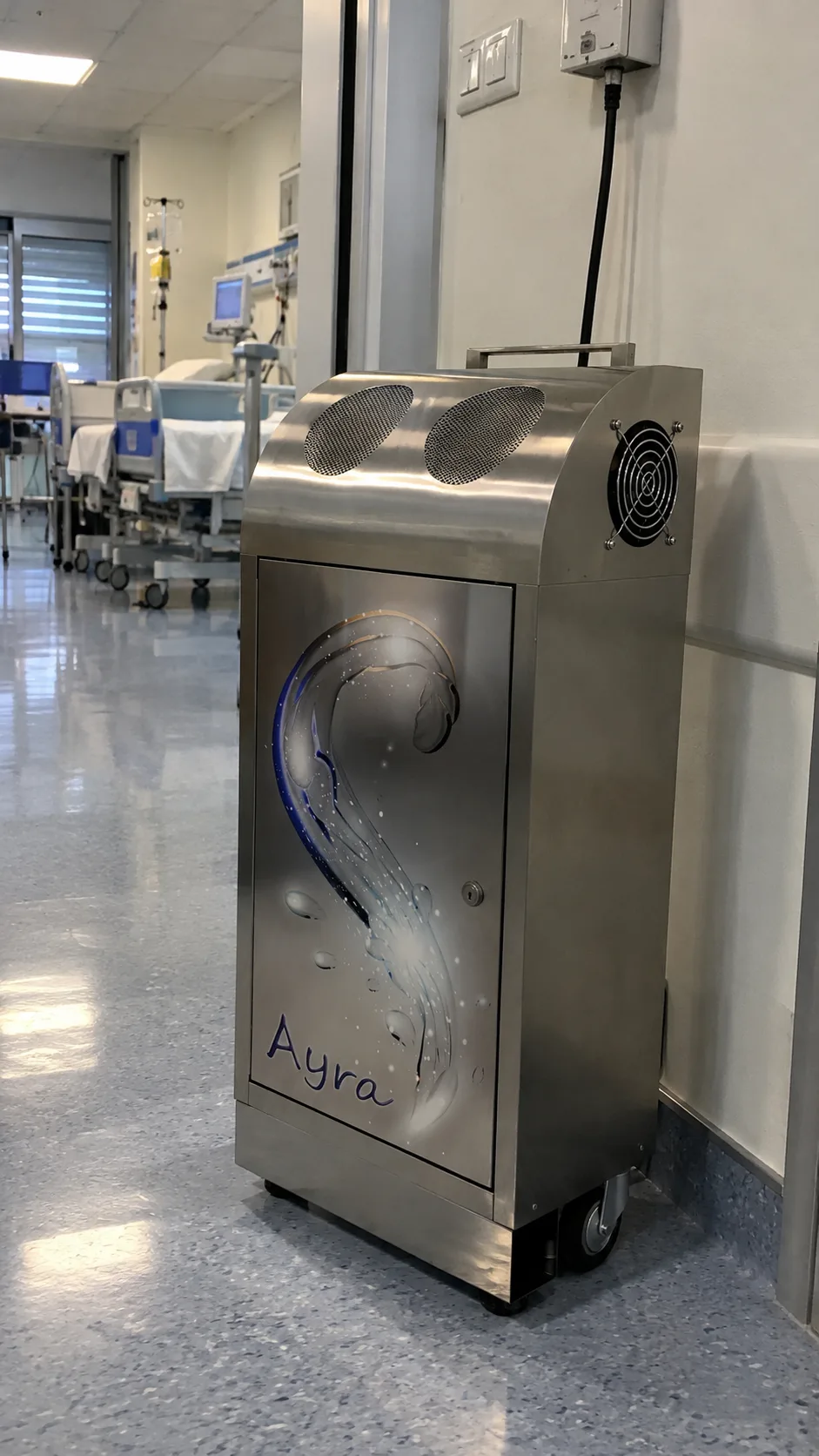
The bottleneck is not fogging: it is movement
In a multi-floor hotel or clinic the device can be technically sound and still fail if nobody decides how it moves. Ayra Trolley exists for that friction: wheels plus luggage handle, about 5 hours battery autonomy and a programmable timer. This guide does not repeat the product sheet; it explains how to build a sustainable room rotation for housekeeping and facility teams.
The cycle looks simple on paper: place, program, let it run, move. In reality paths, lifts, charging stores, liquid re-entry times and priorities (check-out, closed clinical rooms, empty classrooms) matter. Without a map, even a 20 kg Trolley stays parked in a cupboard.
Design the route before buying the fleet
Start from rooms or spaces treated per shift, not from wanting «one trolley per floor». Estimate transfer minutes (corridor, lift, handle over thresholds), cycle length by m³ and re-entry time from the liquid. Only then does it become clear whether one unit is enough or two are needed: one running while the other moves or charges.
An efficient route avoids zig-zag: group by floor or wing, with a battery/liquid point per block. The trolley handle helps on mixed wheel-stair-lift segments; wheels are enough on long corridors. If many zones are small and fixed, add Minis instead of forcing Trolley everywhere.
- Room list per shift with floor and priority
- Average transfer time and bottlenecks (lifts)
- Cycle length by room type
- Charging and liquid top-up point
- Owner for each time block
Hotels: align Trolley with check-out
In hospitality the natural sequence follows departures. Staff clear the room, the Trolley enters, the autonomous cycle starts, then it moves to the next while housekeeping completes other steps. To avoid queues, the protocol must state whether fogging happens before or after certain mechanical cleaning steps and how long the room stays closed.
Common areas (lobby, meetings, spa) are better handled in fixed evening or night slots with a weekly timer, leaving the Trolley free by day for rooms. That way one machine is not pulled in opposite directions every hour. Logging room, time and liquid batch avoids disputes after a complaint or audit.
Clinics and multi-floor sites: priorities and closed windows
In clinics and outpatient centres, rotation must follow the hygiene lead: only allowed rooms, only approved liquids, only windows when the area can stay controlled. Trolley helps move from waiting room to consulting rooms to restrooms without a fixed unit in every space, but it does not authorise off-protocol use.
On multi-floor sites, assign a Trolley per floor block or time band, with a charging store near the lifts. The indicative ~5 hour autonomy must be compared with real cycle length plus transfers: if it dies mid-shift, you need a second unit or scheduled charging, not just «more speed».
| Scenario | Typical setup | Signal you need more units |
|---|---|---|
| Hotel 30-60 rooms | 1 Trolley + evening common slots | Rooms queued beyond turnaround |
| Tall multi-floor hotel | 1 Trolley per 2-3 floors | Lift saturation / long waits |
| Clinic 2-3 floors | 1 Trolley + fixed Minis | Closed windows overlapping |
| Offices / schools | 1 Trolley after hours | Too many rooms in one slot |
Batteries, timers and staff: the three levers
The Trolley's two 12 V batteries help only if a charging ritual exists: end of shift, store, cable, status check. The weekly timer reduces reliance on staff memory for recurring areas; room rotation still needs manual placement. Wireless/SIM options help confirm a cycle started, but they do not replace the route sheet.
Train two owners per shift (lead + backup) so knowledge is not stuck on one person. A one-page laminated protocol: day's route, allowed liquids, re-entry times, who to call if the unit is stuck. That beats a long unread manual.
Checklist to size with Project Vending
For a useful quote, share: rooms/spaces per shift, floors, lifts, estimated average cycle length, liquid, peak hours and any existing Minis or Standards. Via the contact form with project type «Sanitization», Project Vending helps decide how many Trolleys you need and how to mix them with the rest of the Ayra line and surface solutions.
The Trolley product article remains the technical reference (handle, specs, autonomy); this page is the operating piece on rotation. Together they close the offer: right hardware plus a usable method.
- Rooms per shift and floor map
- Real transfer times
- Battery charging plan
- Access and re-entry rules
- Unit count and mix with Mini/Standard
FAQ
How many rooms can one Trolley do per day?
It depends on m³, cycle length, transfers and re-entry times. Calculate from the shift map, not a universal fixed number.
Do I need one Trolley per floor?
Not always. One per floor block can work if paths and windows allow; lift bottlenecks may require more.
Who should move the machine?
Usually trained housekeeping or facility staff. Prefer two owners per shift and a written route.
Does the timer replace rotation?
No. The timer runs recurring cycles in one place; room rotation still needs placement and moving.
When should I add a Mini?
When some small rooms stay fixed and would steal time from the Trolley on the main rotation.
Ready to get started?
Request a free consultation: we'll call you back within one business day with datasheets, a quote and location advice.