
Why helmet hygiene is a business issue, not a nicety
Sweat, skin oils, hair products and road grime build up in liner foam and vents. After a few rides a shared helmet smells, irritates and triggers complaints — especially for scooter rental, training schools and guided tours where the helmet is not «yours».
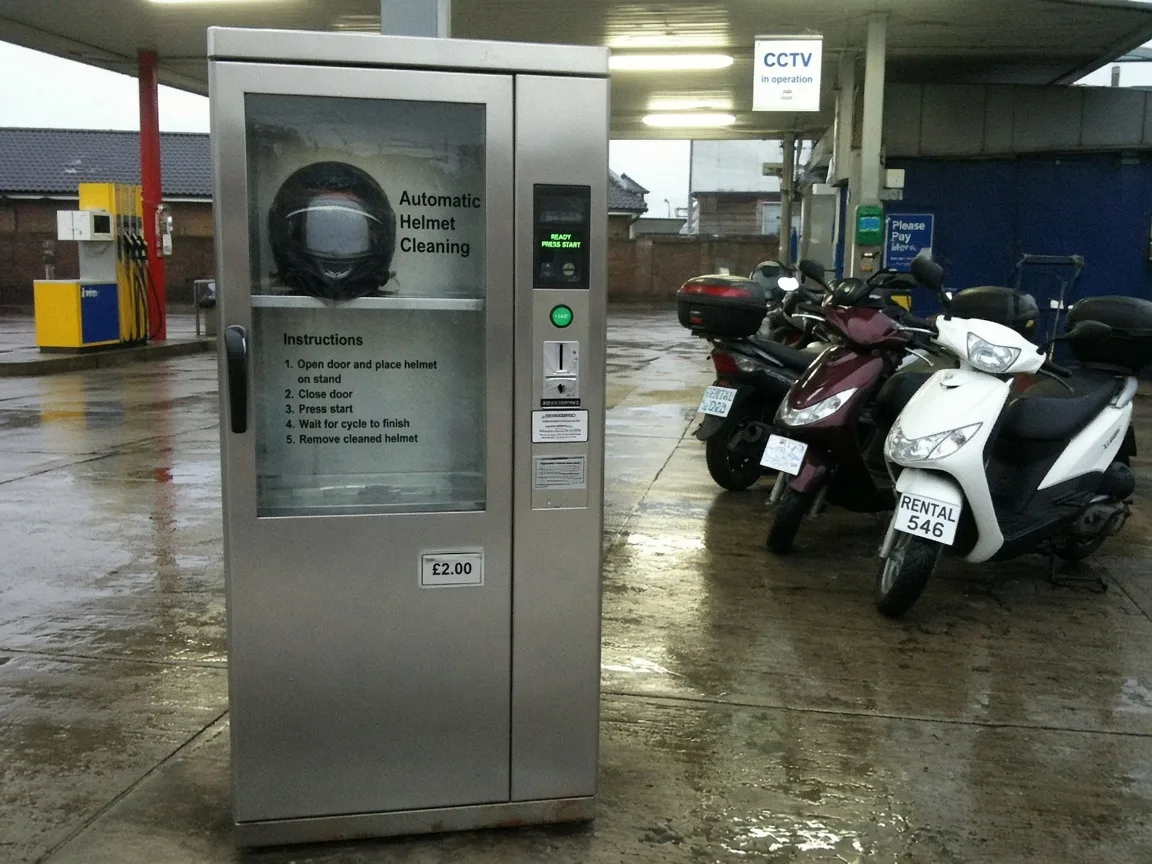
Automatic motorcycle helmet sanitizing machines exist to run a repeatable cycle, paid or bundled, without a staff member spraying and wiping between customers. The goal is not a two-second perfume hit but a closed protocol that reduces odour and microbial load inside the shell.
Project Vending designs professional vending, lockers and custom equipment in Italy, alongside the Ayra fogging sanitizer family. A helmet project can combine a dedicated cabinet, approved liquids, payments and telemetry much like any other unattended retail machine.
Typical user journey
The flow is meant to work with gloved hands: open the door or place the helmet on an internal cradle, close, pick full-face / open-face / modular program, pay with coin, card or rental code. The machine runs sequenced steps — optional dust pre-clean, UV or fogging inside the shell, warm air drying, light deodorising — then signals completion.
Cycle length is often three to twelve minutes. A wet helmet must not be returned to the next rider. The UI should be readable in daylight; the chamber must accept XL shells without scratching visors.
Cashless increases uptake versus coins only. Rental fleets may unlock free cycles via booking QR. Telemetry tells the operator when liquid, filters or lamps need attention.
- Place helmet and close door
- Select program / pay
- Sanitize and dry
- Collect helmet
Technologies: what to compare
| Method | Strength | Watch-outs |
|---|---|---|
| Internal UV-C | No chemical residue | Shadowing; visor care |
| Liquid fogging | Reaches liner foam | Certified fluid; dwell times |
| Ozone | Strong on odour | Safety interlock before door opens |
| Vacuum / filter | Removes grit and hair | Filter service interval |
Many cabinets combine stages. Choice depends on local rules, insurance and customer sensitivity. Serious suppliers document contact materials and fluid sheets; they do not claim hospital sterilisation for a road helmet.
Where installs pay off
Motorcycle dealers and workshops: upsell after service or helmet sale. Tourist scooter rental in cities and coastal areas: visible review impact. Training schools and track days: tight rotation on school-owned helmets. Petrol forecourts on touring routes: passing motorcycle traffic. Moto-friendly hotels: garage amenity.
You need dedicated power, condensate handling if required, and a visible but non-blocking position. Enclosed sites need ventilation at peak use. Landlords often accept lower rent if the unit drives footfall or strengthens the rental brand.
Maintenance and rough economics
Beyond capex or lease: fluids or UV lamps, air filters, weekly chamber wipe-down, service on valves and fans. A paid cycle at £2–£5 in a holiday location can support dozens of runs per day in season; workshops often bundle cycles to retain customers.
Mechanical reliability beats headline price: a stuck door or damp liner creates instant one-star reviews. Project Vending builds machines and payment electronics with the same discipline as snack vending — spares, factory support, custom graphics and software where needed.
Custom projects from Italy
If imports arrive without local support, a factory-led project can size the chamber for your fleet, add multilingual UI, hook into rental software, match brand colours and pair Ayra fogging liquids with your hygiene protocol.
Start from real numbers: helmets per day, peak gap between users, power budget, who maintains the unit. Then decide public paid cycles versus fleet-only access. When you have that brief, contact Project Vending with «Sanitization / motorcycle helmets» or custom projects — we reply with a technical outline, no hard sell.
FAQ
Will it damage liners or visors?
Depends on program and chemistry. Professional cycles use controlled dosing and drying; avoid untested household sprays in the cabinet.
How long is a cycle?
Often five to twelve minutes, depending on model and how wet the helmet is at intake.
Do I need dedicated staff?
Not for day-to-day use, but you need an owner for refills and periodic chamber cleaning.
Is there a standard off-the-shelf helmet model?
We configure custom integrations with Ayra and vending platforms; share volumes and we propose a fit.
Ready to get started?
Request a free consultation: we'll call you back within one business day with datasheets, a quote and location advice.