
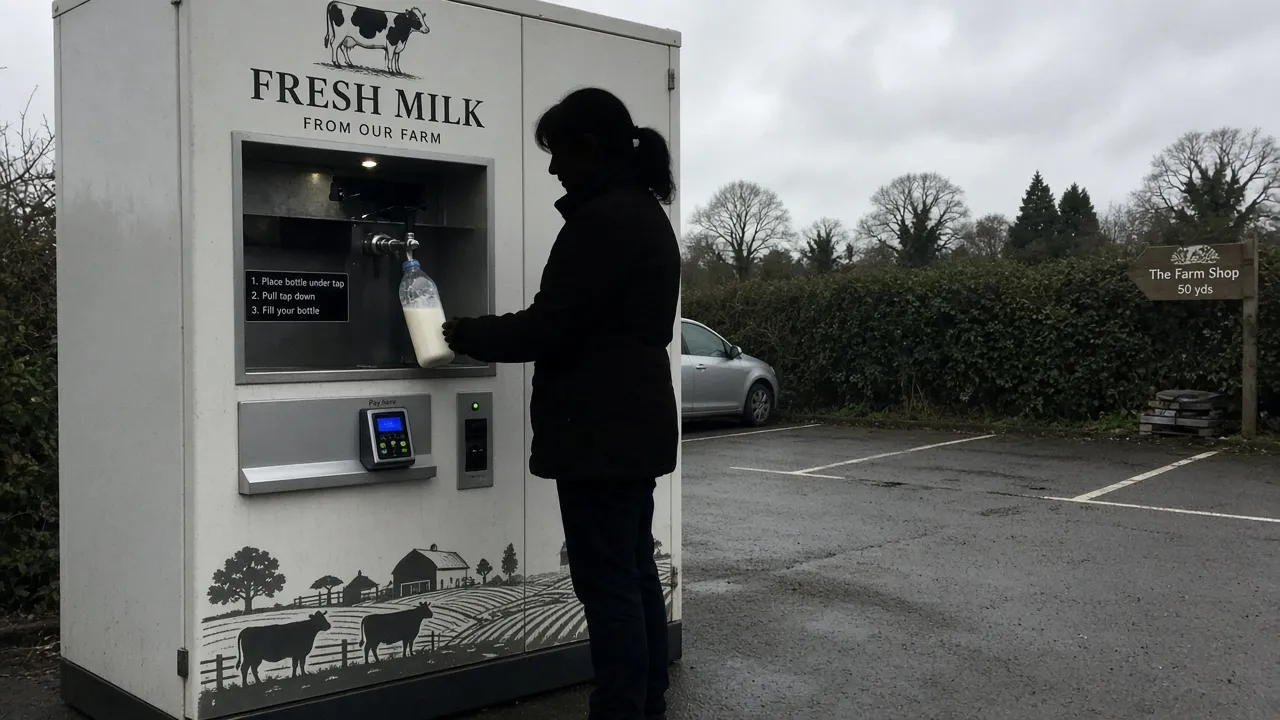
Why fresh milk vending is a real channel — especially in Italy
Searches for «fresh milk vending machine», «raw milk vending machine» or «farm milk dispenser» are no longer niche. Italy runs one of Europe’s largest networks of self-service milk machines, many at the farm gate, selling raw or pasteurised milk 24/7 without staffing a shop. Consumers want short supply chains, transparent pricing per litre and the option to fill their own bottle.
For a dairy farm the upside is extra revenue outside milking hours, less dependence on bulk tank collection prices and direct brand recognition. For a village edge-of-town site or a serviced apartment block, a well-run machine is genuine convenience — fresh milk within walking distance, with a receipt and known origin.
Project Vending is an Italian manufacturer of vending machines and custom unattended equipment. We do not produce milk, but we can supply payment electronics, cashless readers, telemetry and factory support — the same stack used on snack columns — wrapped around a refrigerated milk module or a bespoke farm-gate project.
Raw, pasteurised and filtered milk: what the machine dispenses
A professional fresh milk vending machine is a refrigerated stainless tank (typically held between 1 °C and 4 °C) with agitation, temperature monitoring and, on better units, automatic hygiene of the dispense area — for example a steam flush after each fill — to reduce cross-contamination between customers.
In Italy, raw milk machines operate under national and regional food-safety rules: registration, inspections and prominent consumer warnings that raw milk must be boiled before consumption. Pasteurised or micro-filtered milk, where your licence allows it, widens the audience to households that want farm proximity without home boiling. Elsewhere in Europe terminology differs — Milchautomat in Germany, mlekomat in Slovenia — but the engineering problem is the same: keep cold chain intact and prove it.
Common tank sizes for rural sites are 100, 200 or 300 litres depending on supplier, with refill daily or every other day. Urban and residential sites may need smaller volumes and more frequent service. Always confirm with your official vet and food authority which product categories you may sell before you buy hardware.
- Raw milk: shortest chain, stricter labelling and checks
- Pasteurised: broader public, same 24/7 channel
- Dispense presets (e.g. 0.5 L / 1 L) or per-litre metering
- Printed ticket with farm details, batch or milking date where required
Customer journey: from payment to full bottle
The flow is deliberately simple because people arrive with reusable bottles: choose volume on a keypad or touchscreen, pay (coins, notes, card or contactless), place the container under the spout, dispense with minimal foaming thanks to tuned valves and agitation, close the door and leave. Good machines minimise touch points inside the cabinet and lock out sales if temperature drifts out of range.
Tourist locations benefit from clear per-litre pricing and pictograms. Many farms offer empty bottles or recycling bins nearby — optional but it lifts conversion. Perceived quality depends as much on a clean dispense chamber as on taste; daily cleaning is part of the product.
In flats and commuter villages, morning peaks dominate. Cashless-only reduces vandalism and simplifies accounting, but rural sites often keep notes and coins for occasional buyers and older customers.
Regulation, traceability and liability (practical view)
This is not legal advice, but serious operators map: point-of-sale registration, HACCP-style controls on the milk chain, temperature logs, consumer information and insurance. Raw milk dispensers face periodic inspections; an ignored temperature alarm can stop trading and waste a full tank.
Receipts or post-sale tickets help customers and support your records. Telemetry adds digital logs for level and temperature and alerts you before Monday’s empty tank surprise.
Private farmyard sales differ from public pavement installs: check whether you need a commercial licence, public land permit or only neighbour notification. In condominiums you need owner approval and a service contract for refill and cleaning.
| Topic | Check | Why it matters |
|---|---|---|
| Product type | Raw vs pasteurised | Different approvals and warnings |
| Temperature | Logs and alarms | Food safety and uptime |
| Dispense hygiene | Daily protocol | Trust and inspections |
| Payments | VAT and fiscal records | Same as any vending machine |
| Site | Public vs private land | Permits and liability |
Where to install: farm, village, condo, retail forecourt
The classic layout is a farm shed visible from a regional road: parking, night lighting and a canopy to protect the payment panel from rain and sun. Many dairies place the machine beside cheese and egg sales, building a small km-zero hub.
On urban fringes and in residential complexes, fresh milk vending answers «I only need a litre» trips. You need washable flooring, adequate electrical supply for summer compressor load and safe pedestrian access.
Supermarkets and local shops sometimes host a producer’s outdoor machine on a concession basis. Campsites, agriturismi and rural petrol stations work when demand and refrigeration are reliable.
Payments, telemetry and day-to-day operations
Revenue clusters in the morning and at weekends: cards and contactless cut queues and change handling. Readers must cope with humidity; payment electronics should stay out of the refrigerated cell, as on professional snack vending.
Useful telemetry: tank temperature, milk level, door alarms, vend counts and exports for accounting. Remote price changes help when farm-gate input costs move, provided local transparency rules are met.
Project Vending fits cashless, GSM or LAN modules and factory support on custom projects. Milk tank mechanics stay with the specialist supplier you choose; we align enclosure, payments and monitoring.
Costs, margins and payback
Upfront cost covers the machine or custom module, power supply, optional canopy, approvals, bottles and installation. Running costs: compressor electricity (significant in heatwaves), cleaning, seal service, insurance and transport if you do not sell only your own herd’s milk.
Farm-gate prices in Italy often sit around €1.00–1.50 per litre for local raw milk; margins depend on your production cost rather than wholesale resale. A site moving 80–150 litres a day can pay back in a few years; a site at 15 litres a day rarely does unless the machine is marketing for the rest of the farm.
Model low, medium and high scenarios with real kWh tariffs. Adding eggs, cheese or yogurt sales to the same pull-in multiplies return from the same traffic.
Custom projects with Project Vending
For a «fresh milk vending machine» brief, bring estimated litres per day, licensed product type, site photos, road access, available power, branding needs and cash vs cashless preference. We can combine milk with snack, ice or egg vending under one factory support relationship where it makes sense.
Contact Project Vending with subject «Milk vending» or «Custom project»: technical reply in English or Italian, focused on reliable cold chain, payments and telemetry — not forcing a snack column where you need a stainless tank.
FAQ
How many litres do typical machines hold?
Rural units often use 100–200 litre tanks; higher-traffic sites can use modular larger systems.
Can I sell raw milk everywhere in Europe?
Rules vary by country and region; confirm with your food authority before ordering equipment.
Do customers understand boiling raw milk?
In Italy machines must display the legal warning; many regular buyers know the habit.
Does Project Vending build the milk tank?
We supply vending enclosure, payments and telemetry Made in Italy and coordinate milk mechanics with specialists.
Can this work in an apartment building?
Yes, with owner approval, a service contract and respect for noise and refill times.
Ready to get started?
Request a free consultation: we'll call you back within one business day with datasheets, a quote and location advice.