
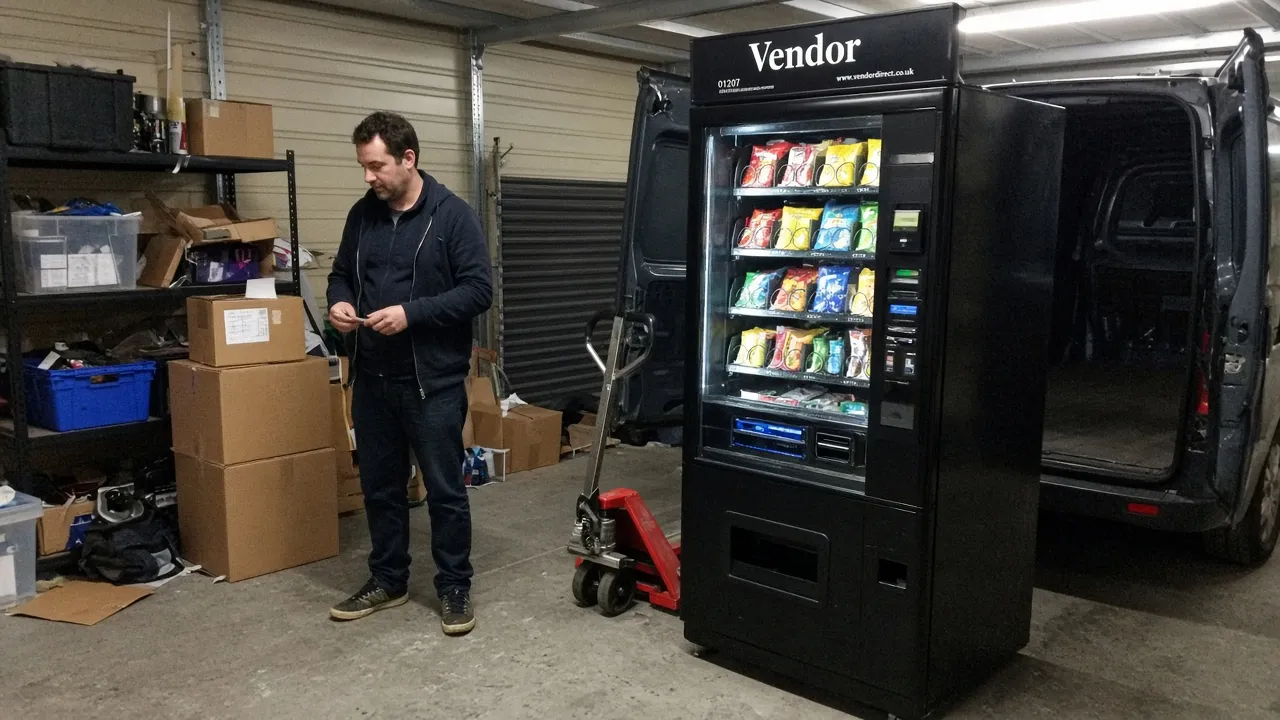
How to become a vending operator in Italy
Becoming a vending operator means managing one or more machines that sell products autonomously. You need a VAT number, electronic receipt compliance and - for professional operators - membership in EVA/EVAA trade associations.
Typical path: feasibility study → location selection → machine purchase → payment setup → launch → fleet scaling.
If you are researching a «vending machine business» from the UK or elsewhere in Europe, the operating rules differ by country; this guide focuses on Italy, where Project Vending is based. Machine supply and export are available regardless of where you operate.
Step 1 - Legal and tax requirements
- VAT registration (flat-rate regime possible under €85,000 threshold)
- Electronic receipt transmission (vending obligation since 2017, AdE Provision 61936/2017)
- SCIA or permit if machine is in public or shared space
- Third-party liability insurance (recommended, often required by venue owner)
- EVA or EVAA membership for professional operators
Step 2 - Initial investment
| Item | Indicative cost | Notes |
|---|---|---|
| Compact machine (Eurosnacky/Selene) | from €790 | Small spaces, first installation |
| Full-size machine (Maxima) | €2,500-5,000 | High capacity, high-volume locations |
| Initial product load | €150-400 | Depends on capacity and mix |
| Cashless system (optional) | €200-600 | NFC/MDB; pays back in 3-6 months |
Step 3 - Launch and scale
- Configure product mix and pricing for your sector's average ticket
- Enable telemetry to monitor sales and stock remotely
- Plan restocking 1-3 times per week based on volume
- After first profitable site, replicate on new locations
- For 5+ machine fleets: negotiate volume discounts and B2B chain contracts
FAQ
Do I need a licence to operate vending machines in Italy?
No specific vending licence. You need VAT, electronic receipt compliance and - depending on municipality - SCIA or installation permit for public spaces.
How much does it cost to start a vending business?
From €1,000 to €4,000 for the first installation. Structured fleets start from €10,000+ with vehicle and warehouse.
Can I rent or hire a vending machine instead of buying?
Project Vending primarily sells new machines from the factory. Hire or rent models are sometimes arranged via operators or partners; buying suits fleets that want full control, telemetry and spare-parts support from the manufacturer.
Ready to get started?
Request a free consultation: we'll call you back within one business day with datasheets, a quote and location advice.