
What a cake vending machine really is (and why coils fail)
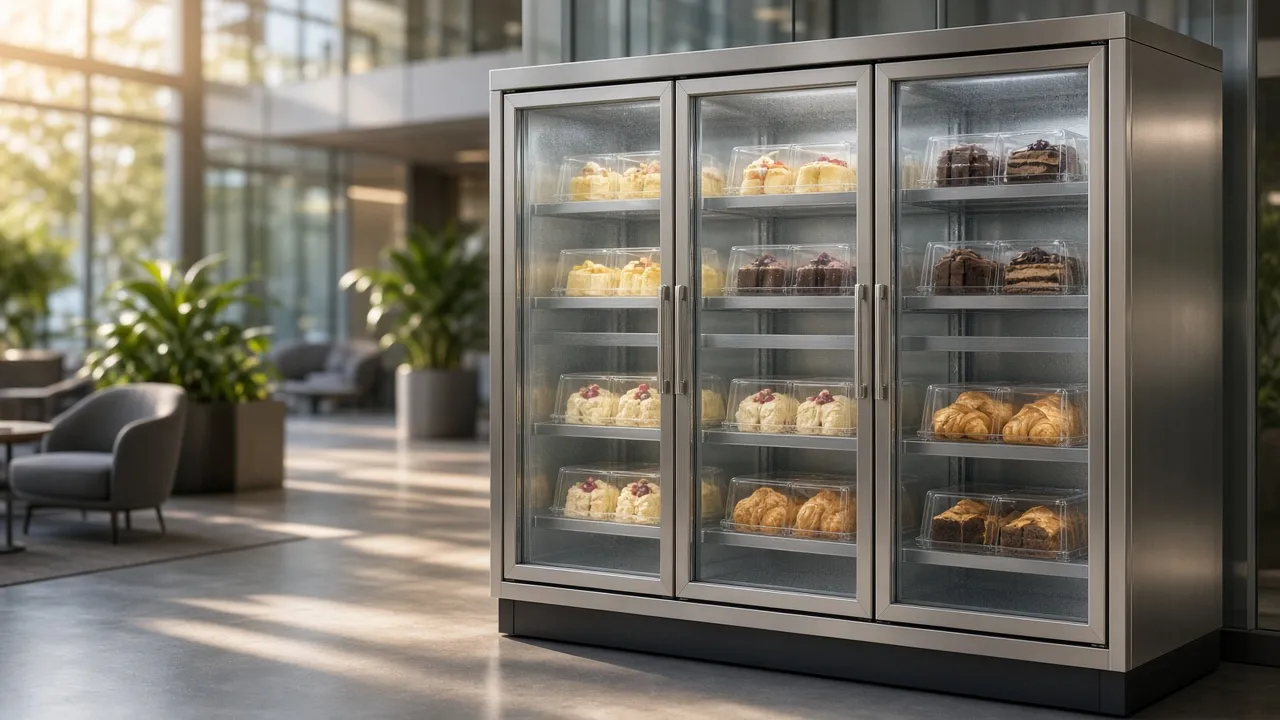
Searches for «cake vending machine», «bakery vending machine» or «cupcake vending machine» assume fragile goods: frosting, cream and layers that cannot survive a spiral drop. Professional setups use refrigerated lockers (one door per portion or box), elevator or XY-axis delivery that lifts without shaking, or chilled showcases with controlled pickup. Common threads: stable cooling, single-serve packaging and tighter expiry control than dry snack vending.
The winning model is often a bakery extension: artisans load the unit after hours for evening, weekend or click-and-collect sales with a pickup code. That is a different business from bulk candy (see our candy guide): £4–12 tickets, freshness margins, and waste if refill discipline is weak.
Project Vending builds connected Made-in-Italy food vendors with refrigeration, cashless and telemetry. For cakes we scope locker/elevator integration with the same POS and temperature monitoring as your existing Maxima/Eurosnacky fleet.
Machine types: lockers, elevators, chilled showcases
Refrigerated lockers: each cell has glass and its own door; payment unlocks only the assigned compartment. Best for whole cakes in boxes, decorated cupcakes and sealed dessert cups. No shared retrieval bin — better hygiene and presentation.
Elevator / XY arm: product sits on a shelf or lane; the mechanism delivers to the pickup hatch without dropping. Used for boxed slices, taller muffins and sealed spoon desserts. Planograms must respect height and weight limits.
Multi-shelf chilled cabinet: bakery-style visibility with locker or internal elevator dispatch. Footprint suits stations and office lobbies.
Classic coils are for rigid industrial packs (factory panettone, sealed muffins) as a side line on Maxima — not for fresh decorated cake.
- 4–30 positive-temp locker cells
- Anti-shock elevator for cupcakes
- Typically 2–8 °C (recipe-dependent)
- Frozen option for ice-cream cakes
- Touch UI with photos and allergens
Customer journey: browse, pay, gentle collection
Typical flow: touchscreen choice (photo, price, ingredients), contactless or app payment, door unlock or elevator delivery in seconds. Shoppers do not touch other products — valued in public spaces and post-pandemic hygiene expectations.
Click-and-collect: kitchen loads a reserved cell; customer enters PIN or QR. One machine serves walk-up retail and prepaid pickup.
Internal LED and clean glass sell better than text-only menus. Refresh seasonal creatives (Easter, Christmas, Valentine’s).
Food safety, expiry logic and allergens
You are a food business: log cell temperatures, HACCP-style controls and batch traceability from kitchen to machine. Many bakeries label each portion with use-by date and ingredients — software can block sales past expiry or trigger end-of-day markdowns.
Allergens (gluten, milk, eggs, nuts): mandatory on-pack and on-screen; coeliac-safe ranges need dedicated cells and load procedures.
Cold chain: insulated load runs, minimise open-door time, telemetry alarms if the compressor fails overnight — protects stock and brand.
| Product | Vend format | Typical shelf life |
|---|---|---|
| Frosted cupcake | Locker / elevator | 24–48 h |
| Cake slice | Elevator, rigid box | 48–72 h |
| Whole cake | Large locker | 2–3 days |
| Mousse / tiramisu | Sealed pot | 48 h max |
| Industrial muffin | Coil (add-on) | Weeks |
Where to deploy: stations, offices, hospitals, sidewalk bakery
Rail and transit hubs: travellers want quality dessert outside café hours; station contracts and out-of-home rules apply.
Offices and residences: sweet micromarket beside Project Vending coffee — breakfast and treat without leaving the building.
Hospitals: single portions for visitors; sugar-conscious assortments if commissioners require them.
Outside the bakery: refrigerated sidewalk units (US examples in 2025–2026 selling cupcakes 24/7) extend hours without night shifts.
Campuses, regional airports, premium campsites: episodic demand but high ticket when the brand feels artisanal.
Malls: compete with food courts; place near cinema or covered parking, not under a bar exclusivity clause.
Economics: margin, waste and payback
Artisan portions often retail £5–10; ingredient cost might be 30–45 % if you bake behind the machine. Shrinkage from unsold fresh stock is the main risk — small daily loads beat filling every locker on Monday.
Specialty chilled hardware runs from tens of thousands upward depending on locker count, elevator and branding. Payback is realistic when you already have local brand and evening/weekend footfall; pure vending arbitrage without a kitchen is harder.
Location share 8–20 % on premium food; contracts should assign glass cleaning and expired product removal to the operator.
Pairing Project Vending drinks and snack columns lifts basket size (coffee + slice) under one service contract.
Payments, telemetry and fleet ops
Contactless is default in stations and offices; cash may remain in neighbourhood bakeries. POS integration for tax reporting per your accountant’s advice.
Telemetry: temperature, door events, sales per cell, low-stock alerts. Routes become data-driven: «six pistachio cupcakes in cell 3 tomorrow» instead of visual guesswork.
On-screen promos and automatic near-expiry discounts need software rules — not just static prices.
Versus candy, pizza and Maxima snacks
Candy: shelf-stable sugar, no critical chill chain. Pizza vending: bake or reheat in-machine — different workflow. Coil snacks: bars and biscuits; not fresh frosted cake.
Our food vending guide covers the wider category; this article focuses on chilled fresh pastry and presentation.
Project Vending supplies complementary columns and custom pastry cabinets with certified locker/elevator partners where needed.
Custom projects with Project Vending
Send product types, temperatures, daily portion count, sites, click-and-collect needs and kitchen integration. We deliver connectivity, payments and Made-in-Italy telemetry; locker/elevator mechanics via specialty partners when required.
Subject «Cake vending»: technical reply from our Veneto team.
FAQ
Can fresh cake run in a spiral?
Not recommended — use locker or elevator; coils only for rigid factory packs.
What temperature inside?
Often 2–8 °C for cream products; confirm with recipe and local rules.
Who owns expiry blocking?
Software can enforce dates; the food operator remains legally responsible.
Does Project Vending supply the full pastry machine?
Custom projects and integration, often with locker/elevator partners.
Permits required?
Yes for fresh food retail — check local environmental health / food authority.
Ready to get started?
Request a free consultation: we'll call you back within one business day with datasheets, a quote and location advice.