
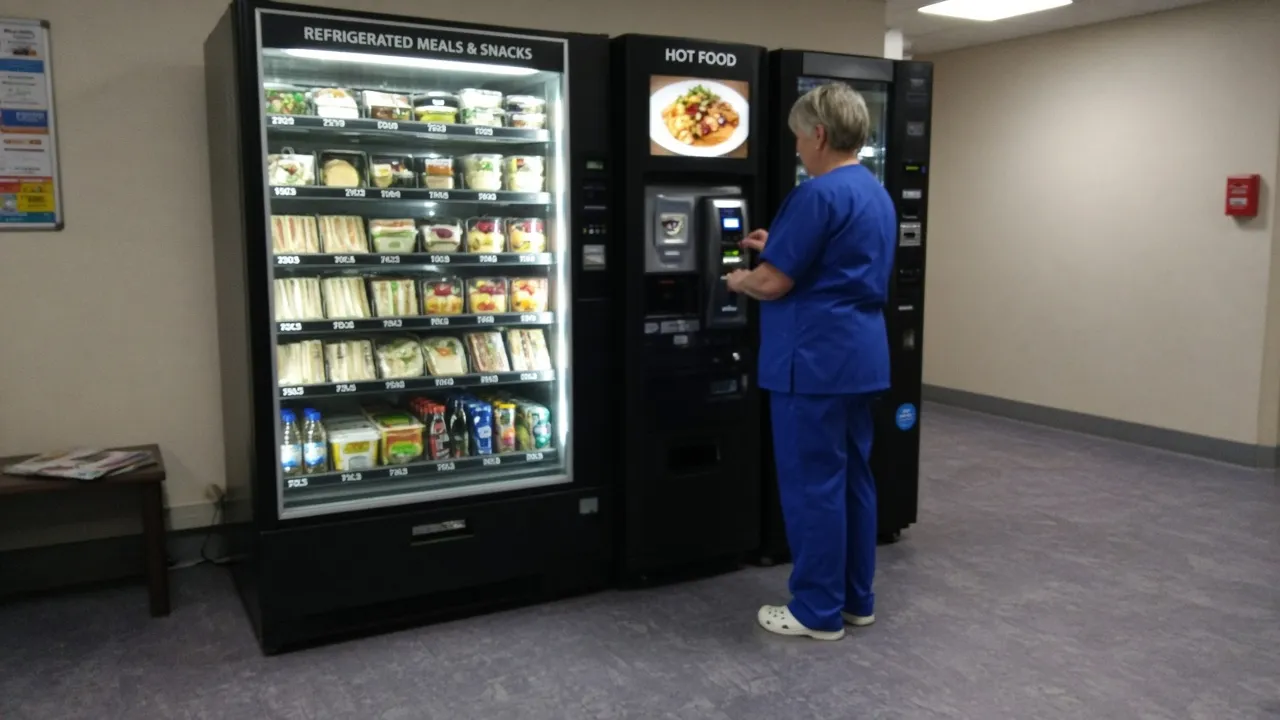
Food vending machines: beyond snacks and drinks
Searches for «food vending machine», «hot food vending machine» or «ready meal vending» mean meals — sandwiches, bowls, hot trays, salads — when the canteen is closed or the night shift is hungry. Food vending blends catering logistics, temperature control and quick-service UX with unattended scale.
Unlike snack spirals (Maxima, Eurosnacky, Selene), you handle perishables, use-by dates, batches and documented HACCP. Machines may be hot-hold only (≥60 °C / 140 °F), chilled only (≤4 °C / 40 °F), combined, or fitted with an oven or microwave that finishes cooking or reheating on site.
Project Vending designs Made-in-Italy vending and custom unattended hubs with cashless and telemetry — pairing refrigerated Lockers for click & collect, drink columns and hot-food modules with commissary partners rather than pretending a snack coil replaces a professional hot cabinet.
Machine types and customer flow
Hot holding: sealed trays in a heated cell; pay, open door, take a hot meal — daily rotation mandatory.
Chilled vending: salads, premium sandwiches, poke bowls; wide coils or lift delivery to avoid crushing.
Cook-on-demand / built-in oven: pizza, bake-off sandwiches — 60–180 seconds, «fresh» perception; needs oven service and grease management.
Integrated microwave: chilled meal sold cold, heated after payment — lower capex, customer waits at the UI with clear timing.
- Choose meal on touchscreen
- Pay card or cash
- Vend from hot or cold cell
- Optional heat/oven step
- Collect and close door
HACCP, temperatures and vend lockout
You operate as a food business: HACCP plan, training, supplier traceability, allergen labelling on every pack. Critical limits: hot hold ≥60 °C; chill ≤4 °C unless frozen spec applies. Excursions should lock the machine until checked — professional units log sensors.
Replenishment: cold chain from commissary to machine; strict FIFO; never exceed use-by. Daily cleaning of doors, guides and touch surfaces.
Hospital, school or government sites may mandate healthy menus, sourcing rules or allergen bans — document for audits.
| Mode | Target temp | Risk if out of range |
|---|---|---|
| Hot hold | ≥ 60 °C / 140 °F | Bacterial growth, stop vend |
| Chilled | 0–4 °C / 32–40 °F | Spoilage, discard batch |
| Frozen | ≤ -18 °C / 0 °F | Uncontrolled thaw |
| On-site oven | Core temp reached | Undercooked centre |
Assortment that actually sells
Tray meals, gourmet sandwiches, ethnic bowls, salads with separate dressing, breakfast pots, certified vegan/vegetarian lines. Avoid items that collapse in transit (soggy fried food) or strong smells in open offices.
Average ticket £5–12 in CBD sites; £4–8 on campuses and factories. Meal plus drink on adjacent machines beats one oversized cabinet.
Weekly menu rotation fights fatigue; telemetry on flavour mix guides commissary production.
Where to install: offices, hospitals, universities, factories, hotels
Corporate and coworking: 24/7 breaks, shifts, lean canteen staffing.
Hospitals: night staff and visitors — balanced menus often in tenders; not the same as pharmacy OTC vending.
Universities: between-lecture peaks; price-sensitive; student cards where integrated.
Industry and logistics: 24/7 hubs when canteen closes at 6 pm.
Hotels: late guest meals; motorway services as complement to snacks with frequent service.
Pizza vending, micromarkets and Lockers
Automated pizza ovens are a food-vending subset — see our dedicated pizza guide. Common hub: pizza + Locker pre-orders + Maxima drinks in one branded corner.
Open micromarkets offer more SKUs with vision/checkout; closed machines fit tighter hospital rules. Project Vending can blend both with aggregated telemetry.
Payments, telemetry and fleet management
Cashless is default in offices (badge, card, app). Retail VAT and fiscal rules apply; meal vouchers depend on local schemes — confirm with your accountant before install.
Telemetry: temperature logs, SKU sales, door alarms, imminent expiry (batch-managed), empty slots. Cuts waste and empty refill runs.
Project Vending fits GSM/LAN modules and dashboards like our smart snack fleets — single Veneto factory support contact.
Costs, margins and production partners
Professional hot/chill/oven units can cost tens of thousands; commissary or certified caterer contracts add ongoing cost. Gross margin on meals often 35–55 % after food cost if menus are tight; expiry waste hurts without data.
Corporate sites may charge zero rent; public sites take revenue share. Payback needs equivalent covers per day — 80 meals/day on one machine in a 500-head office is plausible when the canteen closes early.
Do not load home-cooked trays — use registered suppliers and compliant labelling.
Custom projects with Project Vending
Bring floor plans, peak hours, site HACCP rules, hot/chill/oven preference, Locker integration and branding. We supply enclosure, payments, telemetry and coordinate food modules with technology partners.
Email Project Vending with subject «Food vending» for technical answers in English or Italian — separating perishable food from standard snack spirals.
FAQ
Is this different from pizza vending?
Pizza with oven is one format; this guide covers all ready-to-eat meal vending including trays and chilled lines.
Do I need a food business registration?
Yes — same as retail food; exact rules vary by country and product type.
Can I use only Project Vending snack columns?
For snacks and drinks yes; hot/chilled meals need dedicated cells or custom side-by-side projects.
What if power fails?
Machine should lock vend and alert; at-risk product must be assessed and often discarded.
Employee meal vouchers?
Depends on scheme and POS; plan before hardware sign-off.
Ready to get started?
Request a free consultation: we'll call you back within one business day with datasheets, a quote and location advice.