
Why wet ski boots hurt guest experience
After a day on the mountain, boots and liners hold moisture and heat: odour, bacterial growth and liners that deform if left zipped in a room bag. Alpine hotels, slope-side residences and rental shops see this in reviews («boots still damp at breakfast»).
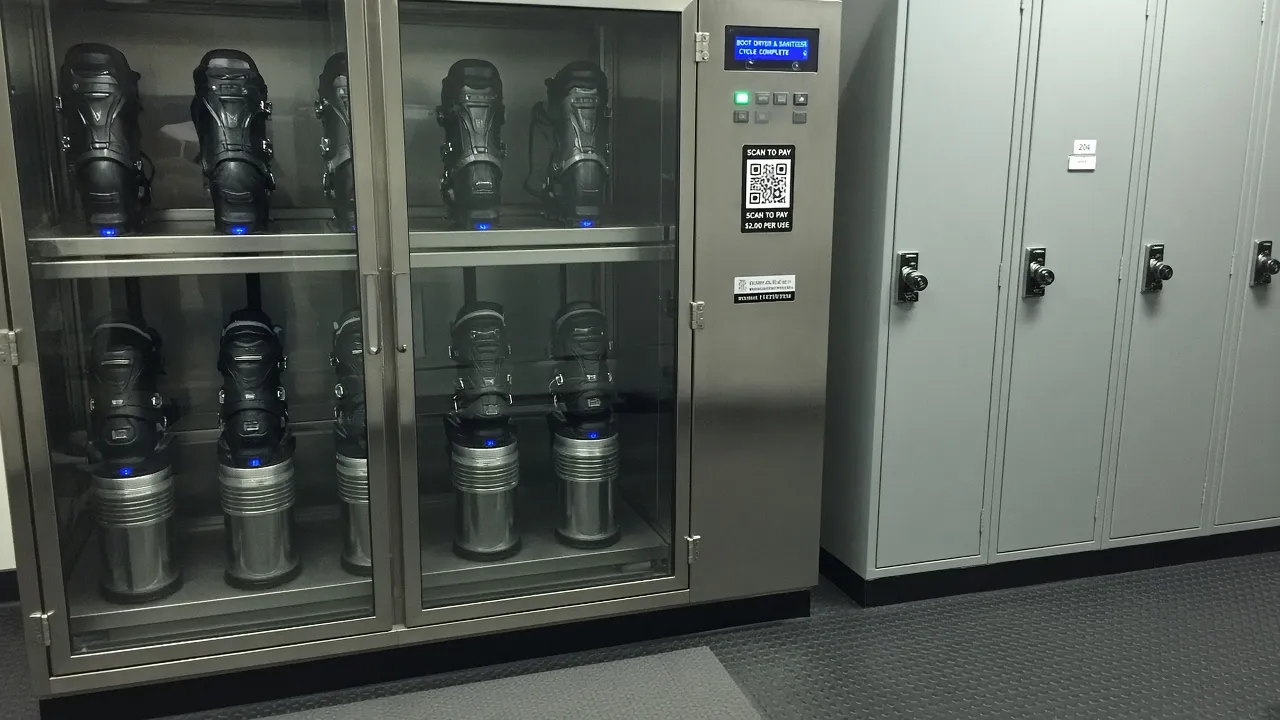
Automatic lockers for drying and sanitizing ski boots provide dedicated bays with warmed airflow, sometimes UV or light fogging, self-service paid or bundled with the stay. Guests load boots (often gloves too), start a cycle and collect dry footwear before first lift.
Project Vending designs vending, lockers and custom Made-in-Italy equipment; the Ayra range supports fogging sanitization protocols. A boot locker bank can combine controlled heat, timers, cashless payment and telemetry like any professional unattended system.
Typical locker journey
Usual flow: open the assigned door (room key, QR or lift-pass badge), place boots on heated inserts with space for liners, close and start — standard dry, intensive after wet snow, short hygiene cycle. Display or LEDs show remaining time.
Duration ranges from 45 minutes to several hours depending on starting moisture and power; hotels often offer overnight long cycles plus 60–90 minute express for early departures. The bay must fit adult high-buckle boots without crushing shells; ventilation must not overheat plastics.
Payment: included in rate, pay-per-use card, or reception code. Telemetry flags faulty doors, temperature anomalies or filter service.
- Open locker and load boots
- Start dry / sanitize program
- Wait with time indicator
- Collect dry boots
Technologies to compare
| Method | Role | Watch-outs |
|---|---|---|
| Circulated warm air | Primary drying | Max temp on plastic shells |
| Heated inserts | Dries inner liner | Timers and overtemperature cut-off |
| UV in bay | Reduces microbial load | Does not replace full drying |
| Deodorizing fog | Persistent odour | Fluid safe for boot materials |
Many mountain installs combine moderate heat and forced ventilation; sanitizing is an add-on, not a substitute for rinsing after extreme mud. Always ask for contact-material certs and winter energy draw.
Where installs pay off
Ski-in/ski-out hotels and residences in the Alps and Dolomites: ski rooms or corridors to lift passes. Rental shops and schools: fast turnover on hire boots between clients. Refuges with overnight stays: night-long cycles. Mountain campsites and dual-season bike-park lodges. Alpine holiday condos: shared basement locker.
You need adequate electrical supply (winter peaks), exhaust ventilation where possible and placement away from combustibles. Fan noise matters near bedrooms. Well-run service lifts booking scores and cuts housekeeping complaints.
Maintenance, energy and economics
Costs: winter electricity, filter and bay cleaning, worn insert replacement, service on thermostats and locks. Paid lockers (£3–£8 per cycle) or weekly bundles can cover consumption in high-turnover sites; luxury hotels often include as courtesy.
Reliability matters: a jammed door with boots inside or heat-damaged liners are serious incidents. Project Vending can integrate access electronics, payments and remote monitoring with the same approach as refrigerated lockers and industrial vending.
Custom projects from Italy
A bespoke project can specify module count (4, 8, 16 bays), hotel branding, PMS integration, lift-pass badges, UI language, temperature sensors and maintenance alerts. You can pair boot lockers with glove/ski-helmet bays or a small hot-drinks vending corner.
Gather data: bed count, families, morning checkout peaks, kW budget. Then choose included versus paid. Contact Project Vending with «Ski boot lockers» or custom projects for a technical outline, no hard sell.
FAQ
How long to dry boots?
Roughly one hour express up to 3–4 hours when very wet; depends on model and program.
Will liners be damaged?
With controlled temperature and timers, no; avoid aggressive cycles on worn custom liners.
Do skis go inside?
Usually boots only; liners often sit on a dedicated grille in the same bay.
Is there a fixed catalogue model?
We assess custom configurations with access, payments and telemetry for your site.
Ready to get started?
Request a free consultation: we'll call you back within one business day with datasheets, a quote and location advice.