
Why dirty footwear matters for brand and hygiene
Dust, mud, winter salt and site debris travel into hotels, offices and gyms on soles. At the entrance it reads as neglect — especially in premium hotels, wellness centres and coworking spaces where flooring is part of the experience.
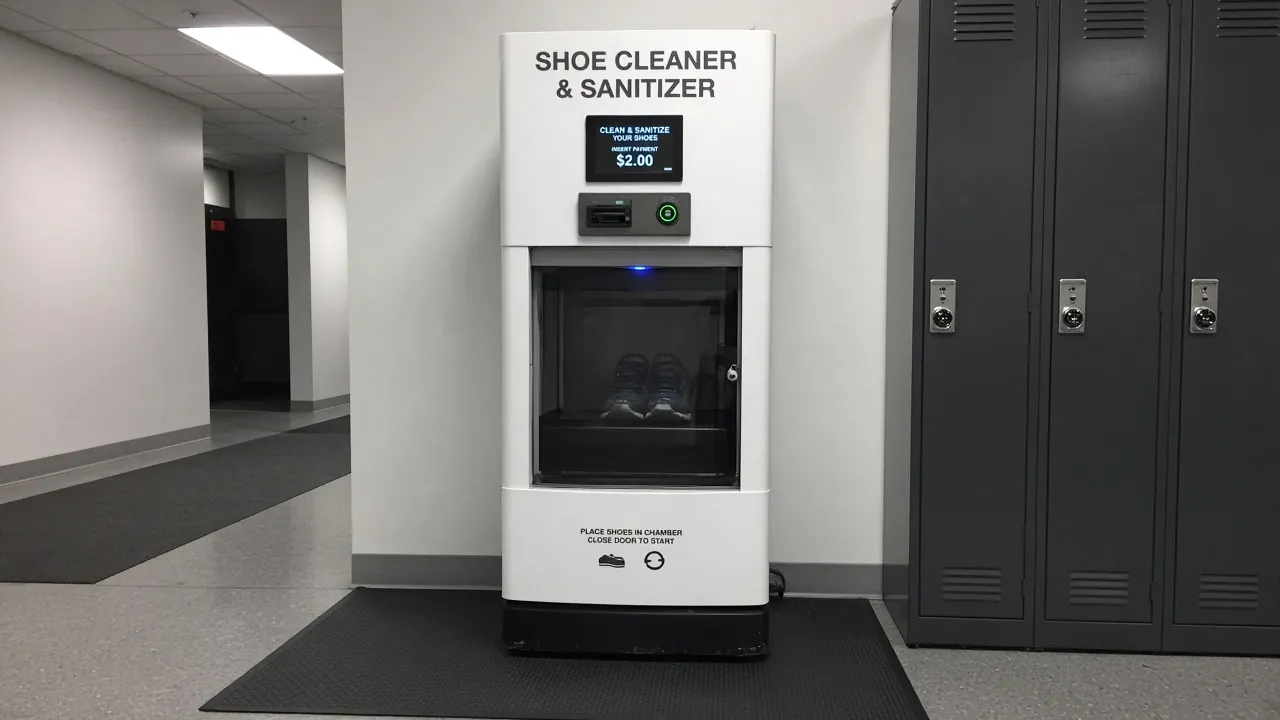
Automatic shoe cleaning and sanitizing machines run a self-service cycle: the guest inserts footwear, pays or uses a code, and collects cleaner, drier shoes without reception or housekeeping handling every pair.
Project Vending designs professional vending and custom Made-in-Italy equipment; the Ayra range covers fogging sanitization for indoor spaces. A shoe cabinet can combine brushes, vacuum, antibacterial fogging, drying and cashless payments like any other unattended machine.
Typical user journey
The flow should be quick: open the door or place shoes on supports (often two bays per pair), pick a program — fabric trainer, leather, light work boot — and start via card, app or coin. The unit runs sequenced steps: external dust removal, sole and upper treatment, optional internal fogging for gym shoes, air drying.
Cycles often last two to eight minutes depending on soil level and material. UI should work in local language plus English; the chamber should accept large sizes without crushing uppers. Business hotels benefit from a sub-three-minute «express» program between check-in and meetings.
Telemetry and cashless lift usage versus coins only and alert when detergents run low, vacuum filters need service or a cycle aborts.
- Load shoes and close chamber
- Select program / pay
- Clean exterior + sanitize where fitted
- Dry and collect
Technologies to compare
| Method | Best for | Notes |
|---|---|---|
| Brushes + vacuum | Soles and dry mud | Brush and bag service |
| Detergent spray + rollers | Leather and synthetics | Dosing and material compatibility |
| Antibacterial fogging | Trainers and insole area | Certified fluid; dry time |
| UV in chamber | Odour and microbial load | Does not replace visible soil removal |
Many units combine stages. Gyms care about perceived hygiene on studio and cross-training shoes; hotels care about appearance on leather and synthetic suede. Serious suppliers state material limits and do not claim full laundry results on delicate uppers.
Where installs pay off
Four- and five-star hotels and resorts: lobby or concierge adjacency, paid or bundled for suites. Gyms and fitness clubs: beside changing rooms for commuters. Corporate offices and campuses: high-footfall entrances. Stations and interchanges: travellers with day bags. Museums and exhibition halls: protecting floors and carpets. Upscale residential: concierge shared amenity.
You need dedicated power, enough footprint for two pairs if throughput is high, and a position that does not block escape routes. Enclosed sites need noise planning for brushes and detergent smell at peak hours. Landlord rent can be offset by cycle revenue or review uplift («extra lobby services»).
Maintenance, consumables and rough economics
Recurring costs: detergent, brushes, filters, weekly chamber wipe-down, service on motors and pumps. A £3–£6 cycle in tourist or business locations can support dozens of runs daily; gyms often price lower to drive use before the gym floor.
Mechanical reliability beats headline price: trapped shoes or damp uppers create instant complaints. Project Vending integrates payment electronics, custom graphics and factory support with the same discipline as Maxima and Eurosnacky lines.
Custom projects from Italy
If imports lack spares, a factory-led project can size the chamber for light safety boots or two trainers, add multilingual UI, hook into hotel PMS or corporate badges, match brand colours and pair Ayra fogging liquids with your hygiene protocol.
Start from real numbers: pairs per day, morning peaks, who refills and cleans. Then choose public paid cycles versus members-only access. Contact Project Vending with «Shoe cleaning / sanitizing» or custom projects — we reply with a technical outline, no hard sell.
FAQ
Can I clean leather or suede?
Only on dedicated programs after supplier testing; avoid aggressive cycles on delicate materials.
How long is a cycle?
Usually two to eight minutes depending on program and soil level.
Do I need on-site staff?
Not for day-to-day use, but you need an owner for refills and periodic cleaning.
Is there a standard off-the-shelf shoe model?
We assess custom configurations with payments and telemetry; share volumes and user types.
Ready to get started?
Request a free consultation: we'll call you back within one business day with datasheets, a quote and location advice.