
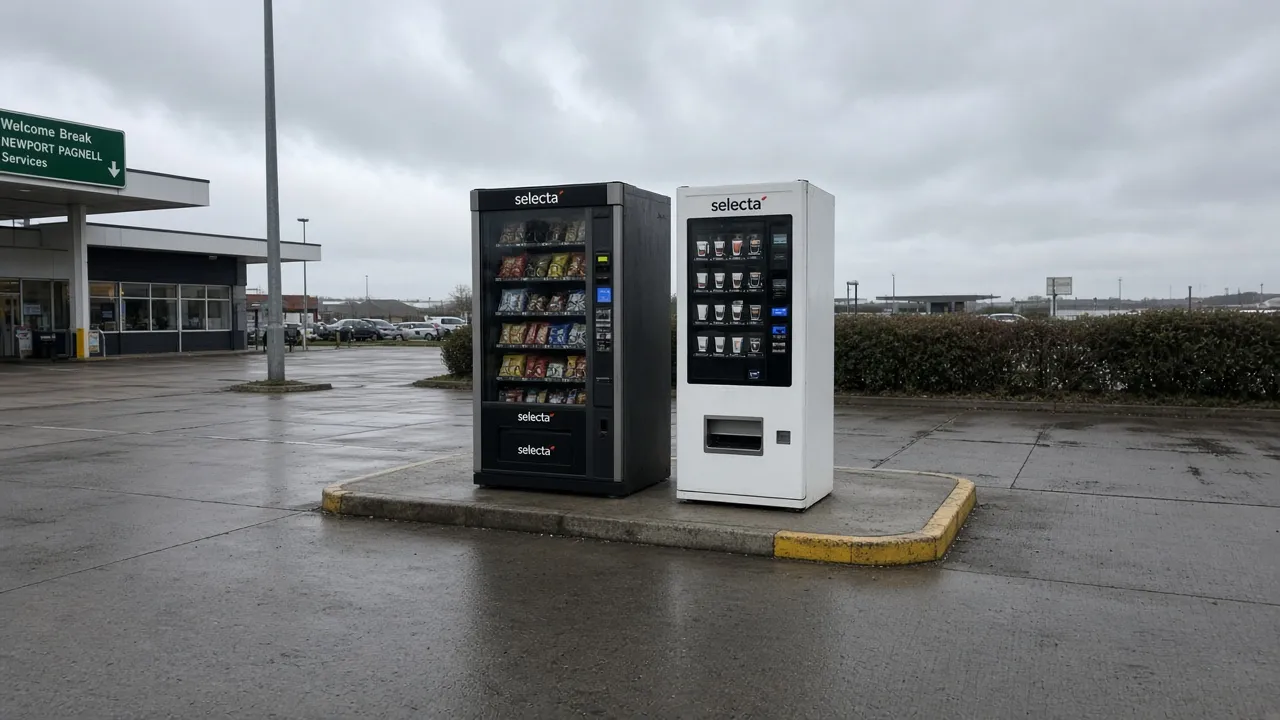
Reverse vending machine: vending in reverse
Searchers for «reverse vending machine», «RVM» or «bottle return machine» want to return PET bottles and metal drink cans and recover a deposit refund (or loyalty credit). The unit identifies the container, reads barcodes or approved shapes, crushes or compacts material and logs the transaction to a national Deposit Return Scheme (DRS).
That is the opposite of a Project Vending machine that dispenses product for payment — yet both belong in the same hub: supermarket forecourt, petrol station, campus. You sell drinks from Maxima/Eurosnacky columns; the shopper brings empties to the RVM next door.
Italy still has no live national DRS (early 2026), but EU PPWR rules and parliamentary bills target deposit systems on PET and metal beverages up to 3 litres, with a 90% collection goal by 1 January 2029 unless a narrow exemption applies. Anyone planning sites today studies European RVM rollouts as engineering benchmarks.
How an RVM works: from empty to refund
Feed: user places a bottle or can into a slot or conveyor. Sensors check weight, shape and material; scanners read EAN/GTIN or 3D signatures.
Accept or reject: unknown formats, crushed unlabelled items or fraud attempts bounce back or route to reject bins — clear UI prevents queue rage.
Compaction: PET is crushed; cans are compacted into internal storage. That cuts logistics volume.
Refund: printed voucher, app wallet credit, store coupon or card payout — set by the national DRS operator. Germany often €0.25; Netherlands €0.15/€0.25; Poland from 2025 around 0.50 PLN.
Service pickup: trucks empty compacted material; remote telemetry reports fill levels and faults.
- Barcode / shape recognition
- Anti-fraud weight and IR checks
- Internal compaction
- Voucher or cashless refund
- Retail dashboard integration
Machine types: standalone, walls and high-throughput hubs
Standalone at supermarket entrances: one or two users, footprint similar to twin snack vendors.
Wall banks: multiple RVM modules for Sunday peaks — common in Germany and Scandinavia.
High-throughput malls or stadiums: belts, parallel lines, staff during launch windows.
Manual assisted counting in small shops without compaction — sometimes allowed in early DRS phases, less efficient.
Project Vending does not manufacture industrial RVMs (Tomra-class). We can design hub layouts (forward beverage + reverse + EV charge) and site connectivity with certified RVM partners.
Europe 2025–2026: lessons from live schemes
More than 17 EU countries run DRS; Austria and Poland launched in 2025; Portugal (Volta) in 2026 with thousands of RVMs. Ireland Re-turn from 2024; Netherlands added cans in 2023.
High return rates (Norway, Germany, Finland >90%) need clear deposits, dense take-back points and barcode traceability from producer to refund.
Italy sits in «planning»: producer hearings in 2026, deposit bills filed late 2025. Vending operators should prepare floor space, staff training and IT hooks — not import RVMs without an approved national scheme.
| Country | DRS status | Typical deposit |
|---|---|---|
| Germany | Live | €0.25 |
| Netherlands | Live | €0.15–0.25 |
| Poland | From 2025 | 0.50 PLN |
| Portugal | From 2026 | €0.10 |
| Italy | In design | TBD by 2029 |
| France | No national | — |
PPWR, Italy and the 2029 calendar
EU Packaging Regulation 2025/40 pushes member states toward deposit return on single-use plastic beverage bottles and metal beverage containers ≤3 L, unless exempted after proving >80% separate collection in 2026 and notifying a plan by 2028 — a high bar for Italy historically.
Italian parliamentary proposals (December 2025) strengthen environmental code articles: operators must run schemes by 1 January 2029 collecting ≥90% by weight of listed formats.
Retailers face take-back obligations when selling in-scope drinks; producers label deposits, fund the system and trace SKUs.
RVMs become as critical as POS — not optional green décor.
Fraud, hygiene and maintenance
Classic fraud: filled bottles, duplicated labels, wrong materials. Modern RVMs use expected weight, NIR sensors, container libraries and per-user daily caps.
Hygiene: sticky residues, summer insects — scheduled cleaning of inlets, liquid trays and compactors. Supermarkets bundle this with front-of-house ops.
Breakdowns: glass jams, compactor faults — enterprise SLAs often <24 h; telemetry mirrors smart snack fleet practice.
Where to deploy: grocery, forecourt, offices, events
Supermarkets: entrance or covered car park — highest volume, «shop + empties» convenience.
Petrol stations: drivers with car litter; pair with Project Vending snack and drink columns.
Campuses and HQs: CSR sustainability hubs; refund to badge or charity donation.
Festivals: rented RVMs with symbolic deposits to cut litter.
Dense historic centres may need compact units or manual counts until RVM density grows.
Economics: who pays and who benefits
Industrial RVM CAPEX: tens of thousands per module; leasing via DRS managers or beverage consortia. OPEX: service, power, emptying, software fees.
Retailers may earn per-transaction fees or comply without direct margin — value is traffic, ESG and PPWR readiness.
Producers and schemes fund the loop; shoppers prepay deposit in drink price and recover it on return.
For beverage vending operators, DRS does not automatically shrink sales; clear «buy–drink–return» loops can stabilise brand trust.
Integration with Project Vending (forward vending)
Project Vending builds Made-in-Italy drink and snack vendors with cashless and telemetry — complementary to RVMs, not replacements.
Hub projects: Maxima water/fresh lines + snack columns + partner RVM bay + PPWR signage; one contact for layout and site connectivity where possible.
Prepare for 2029: map in-scope beverage points of sale, reserve power and network, align product barcodes with Italy’s future scheme operator.
Email subject «Reverse vending» vs «Beverage vending» for the right Veneto team reply.
Contact and next steps
Grocery, forecourt or beverage fleet managers: send entrance dimensions, drink volumes, 2029 goals and interest in RVM + Project Vending pairing.
Pure RVM supply routes through DRS operators and certified manufacturers; forward vending we build in-house.
FAQ
Does an RVM sell products?
No — it takes empties and refunds deposits; opposite of classic vending.
Can I install an RVM in Italy now?
Yes for pilots, but standard refunds need a live national DRS.
Does Project Vending build RVMs?
No — forward drink/snack; hub layout and RVM partners on request.
Which packs will be in scope?
PPWR points to PET and metal drinks up to 3 L; confirm final law.
Is Tomra the only supplier?
No — Tomra, Envipco and others; national operator chooses.
Ready to get started?
Request a free consultation: we'll call you back within one business day with datasheets, a quote and location advice.