
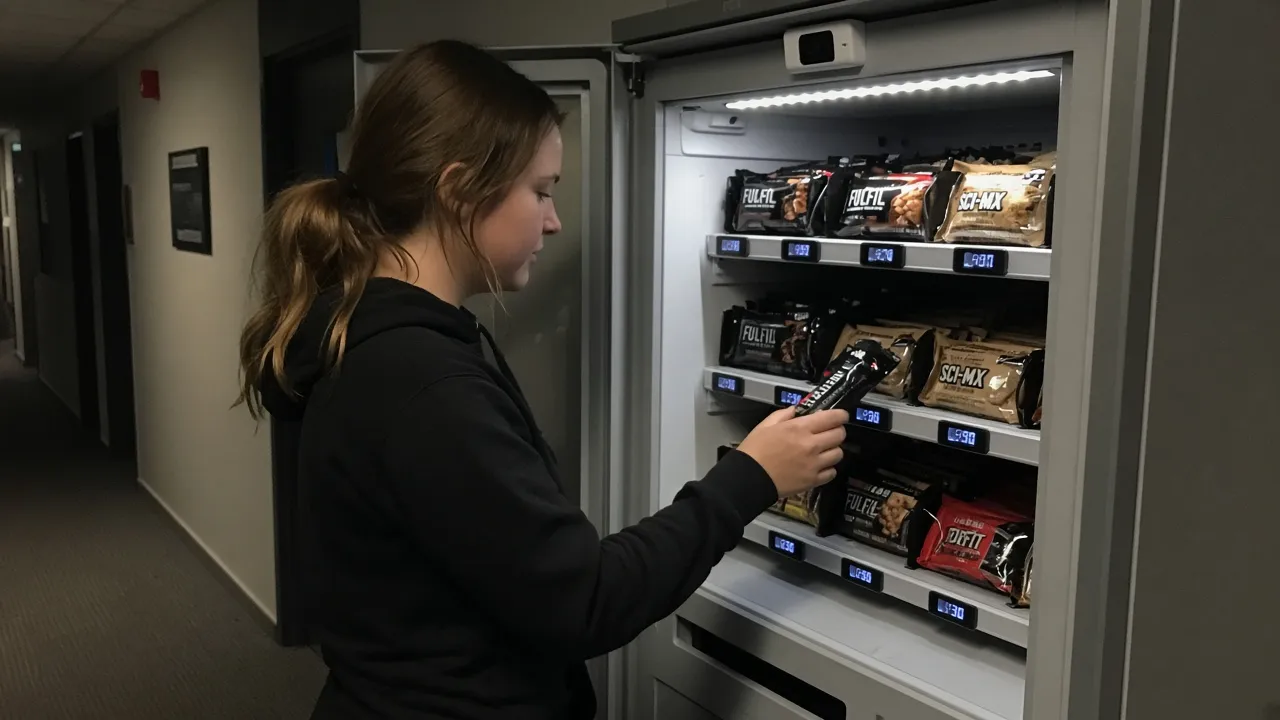
What «AI vending machine» means in 2026
Searchers typing «AI vending machine», «artificial intelligence vending» or «vending machine computer vision» mix hype with deployable tech. In practice AI shows up in three lanes: vision (what was taken or what remains on shelf), operations (predicting stock-outs, routes, promos) and interface (personalised UI, chat, recommendations). It needs telemetry-ready hardware, clean data and explicit privacy rules.
Recent research on SKU recognition in automated machines and dual-camera «sensorless» cabinets shows vision can move inventory from guesswork to transaction-level counts — especially in open micromarkets, less so in classic coils where the vend switch already logs the slot.
Project Vending builds connected Made-in-Italy machines with cashless and dashboards. AI pays off when it extends already-smart Maxima/Eurosnacky/Locker fleets with vision modules or software partners — not when bolting a chatbot onto a 1990s mech machine.
Computer vision: inventory, grab-and-go and planograms
In open-door fridges, cameras capture before/after sessions, segment look-alike packs and rebuild the receipt. Sensorless stacks use video + AI without per-SKU weight or RFID — lower hardware cost, harder algorithmics on occlusion and partial returns.
On coil vendors, vision can audit planograms at refill (wrong flavour in slot 12) via operator photo or fixed camera — cutting misload errors.
Lighting, camera angle and training on your real SKU set matter more than the buzzword model name.
- Pick-up / return event detection
- SKU classification on similar packs
- Post-refill planogram audit
- Stock estimate without opening door
- Misplaced product alerts
Real deployments in 2025–2026: vision coolers and retail micromarkets
AI vending is moving past conference demos. Coca-Cola is scaling hundreds of Coke&GO smart coolers across Australia and New Zealand (after airport trials): QR or card tap, open door, image recognition of items removed, automatic payment — plus smarter restock signals to cut out-of-stocks. It is the beverage grab-and-go pattern many European operators watch for stations and campuses.
In Belgium, Carrefour pilots Reckon.ai fridges (BuyBye format): cameras, shelf weight and AI for 24/7 shopping outside hypermarket hours, with live inventory dashboards. It shows fresh food retail wants vision plus corroborating sensors, not coil telemetry alone.
2026 research on «sensorless» cabinets (dual camera, zone tracking, explicit take/return events) reports F1 above 0.94 on in-service transactions with edge CPU inference — a signal that the market favours short video retention and auditable fusion rules over tagging every SKU with RFID.
Italy tends to pilot before national rollout: start with one corporate site or gym micromarket, measure shrinkage and refill time, then scale — matching the Project Vending roadmap below.
Predictive telemetry and ops AI (beyond cameras)
Even without cameras, ML on hourly/daily sales improves routes — «bring 18 units Tuesday to this gym» beats fixed weekly visits. Weather and events help if you do not overfit sparse data.
Dynamic pricing in vending is contract-sensitive; AI-driven on-screen promos (afternoon energy drink bundle) are often easier than surge pricing coffee at 8:01.
Predictive maintenance on compressors, temperature drift and jam codes opens tickets before Saturday failures.
UI personalisation and conversational layers
Large screens enable context menus: protein in gyms, gluten-free in hospitals, meal combos in offices. Anonymous session ranking of SKUs is fine; storing identities without consent is not.
Voice or chat «something caffeine-free under £2» works with structured catalogues; otherwise prefer clear filters to LLM hallucinations.
Auto-translated allergen panels help airport and campus hubs.
Age verification, regulated vend and AI limits
Vape, alcohol and 18+ content may use camera age estimation or ID scan. EU law needs GDPR basis, minimisation, DPIAs and often human review on edge cases — see our vape age-verification guide. AI does not replace document checks where statute requires them.
False accepts/declines carry reputational cost. Project Vending integrates certified age hardware where required, plus standard telemetry.
| AI use | Value | Risk to manage |
|---|---|---|
| Vision inventory | Less waste, fewer visits | Look-alike SKUs |
| Predictive refill | Fewer empty slots | Thin history |
| Dynamic promo UI | Higher basket | Landlord contract |
| Age estimation | Faster flow | GDPR, minors |
| Voice assistant | Premium UX | Wrong answers |
GDPR, video and data
Cameras on hands or faces process personal data if identifiable. Clear notices, lawful basis, short retention, face blur where feasible.
Separate sales aggregates from video streams for corporate DPO comfort.
Prefer EU hosting, encryption, MFA for operator portals. Project Vending telemetry can align with client policy without dumping CCTV on non-compliant servers.
Where AI vending pays off (and where it does not)
Strong: office micromarkets, premium gyms, hospitals, campuses, airport back-of-house — higher basket, medium catalogue, costly mis-refills.
Weak: single coil in a quiet laundrette with eight stable SKUs — basic telemetry is enough.
Winning hybrid: 30+ Project Vending snack units on one dashboard plus two vision cabinets as pilots.
Integration with Project Vending — realistic roadmap
Step 1: cashless + telemetry fleet-wide (see smart vending guide). Step 2: digital planogram and empty-slot alerts. Step 3: single-site vision pilot with a software partner. Step 4: refill prediction after 12 months of data.
Define KPIs before RFP: fewer empty visits, less shrinkage, sales uplift per machine.
We support sales exports, POS hooks and factory-designed doors for sensors — not rushed retrofits.
Costs, ROI and build vs buy
Vision adds cameras, edge compute and monthly software plus initial SKU labeling. ROI when shrinkage and route savings cover fees in 18–36 months on busy sites.
Compare vertical micromarket platforms vs open stack on Project Vending telemetry.
Demand offline behaviour: vend and reconcile when the network returns.
Projects with Project Vending
Bring machine count, pilot sites, SKUs, client GDPR constraints and goals (inventory vs marketing vs age). We deliver connectivity and Made-in-Italy hardware; vision/ML with certified partners.
Email «AI vending» for technical replies in English or Italian — complementary to, not a replacement for, smart telemetry.
FAQ
Is AI vending the same as smart vending?
Smart vending is telemetry and cashless; AI adds vision, prediction or advanced personalisation.
Always-on internet?
Required for cloud AI; plan degraded local vend modes.
Does a Maxima coil become AI automatically?
No — you need cameras/sensors or structured data; coils remain reliable vend logging.
Put ChatGPT on the screen?
Only with structured catalogue and privacy policy; guided UI is often safer.
Does Project Vending sell AI software?
Telemetry and integration; vision modules via project partners.
Ready to get started?
Request a free consultation: we'll call you back within one business day with datasheets, a quote and location advice.